
Made possible by generative AI, our technology is more than a tool, it's the mechanism for treating genetic diseases. Our NeoMini editors are half the size of current industry editors, allowing for better delivery and packaging options.
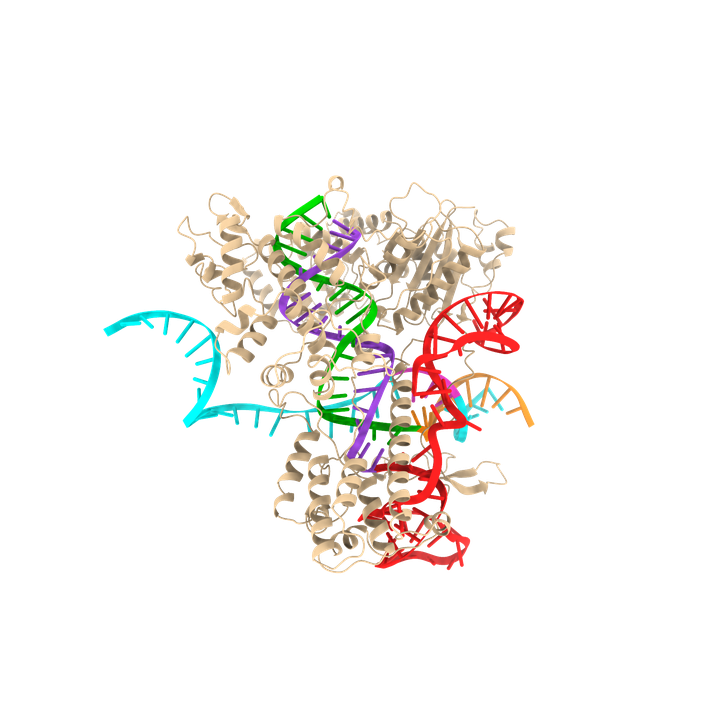
Proprietary end-to-end. Every step runs on Neoclease's own models and scripts and writes structured data into a shared training set, so high-throughput analysis continually informs the model for more precise generation.
Our secret weapon is a proprietary algorithm trained on all known nucleases, built on state-of-the-art neural network architectures. It acts like a compass, guiding us toward the design most likely to work for a given target, rather than starting from scratch each time.
Neoclease takes a "lock and key" approach instead: an editor built fit-for-purpose for each target, so specificity, tissue reach, and immune profile are designed in from the start, not worked around afterward.
Every editor is designed for a single target
Miniature editors reach more of the genome
Compact neuron-ready libraries
Here's where our lead program sits today.
AI-guided design & early wet-lab validation
In vivo & safety studies
Regulatory submission
First-in-human trial
Our first nuclease targets LRRK2, a gene strongly implicated in ~30% of Parkinson's disease. Our goal is a precise edit to slow or halt disease progression with a single dose. Our editor is small enough to deliver to the brain, reaching the cells that matter where other editors and drugs struggle to at meaningful levels.
Synthetic biology is the art and science of redesigning life at the molecular level, enabling tunable biology.
It's the foundation under everything above, the reason our editors can be both precise and effective, because every design decision traces back to the biology of the target itself.